Dekor Event has worked in event technology for around 11 years. Its roots are in lighting and media technology, but today the company operates as a full-service provider across Germany, with references including Parookaville and the opening of this year’s Berlinale. At Hive, the team handled design, setup, operation and dismantling for the Mainstage, Groove Beach and the Rage Stage, including rigging, SFX and set construction.
A stage the audience becomes part of
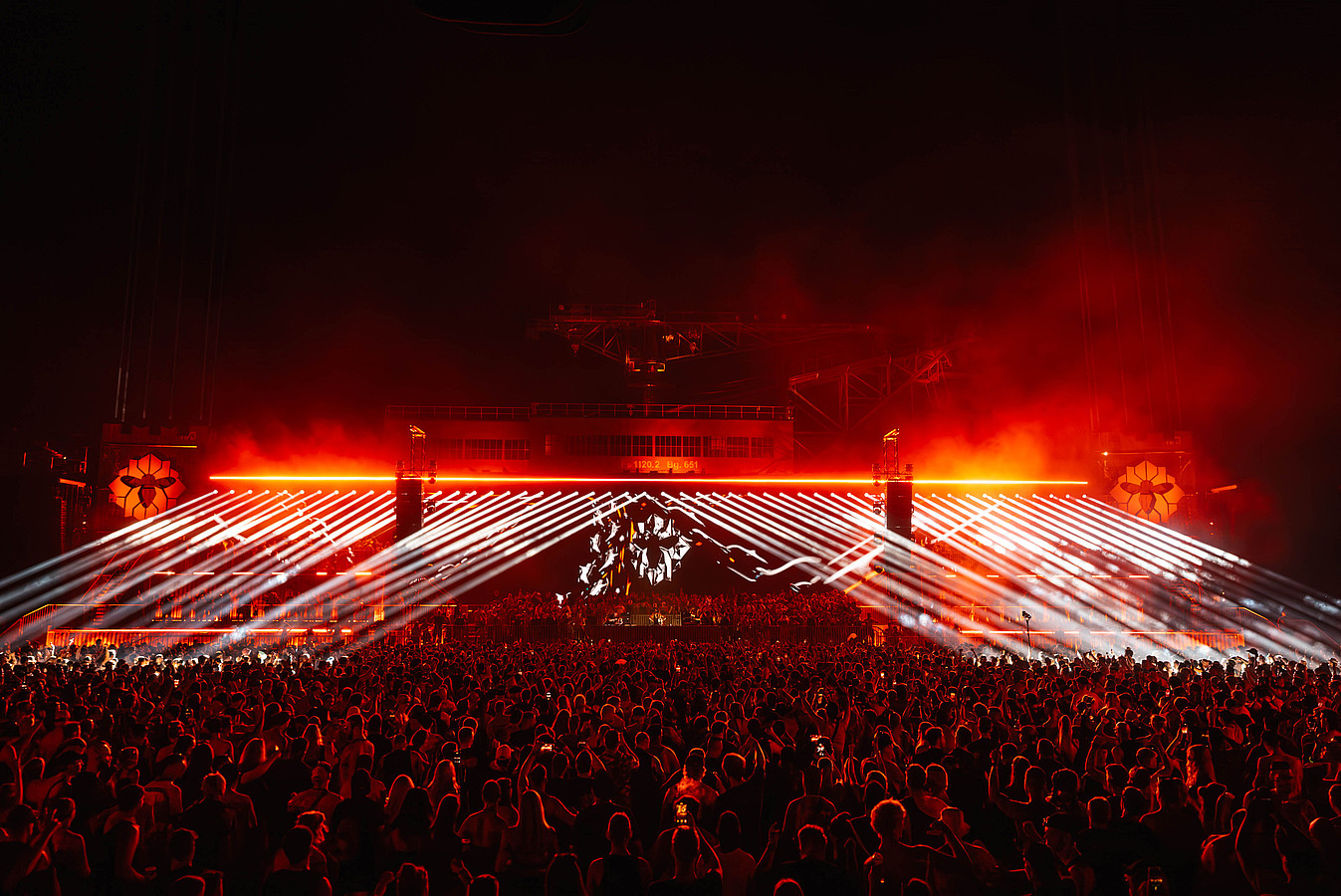
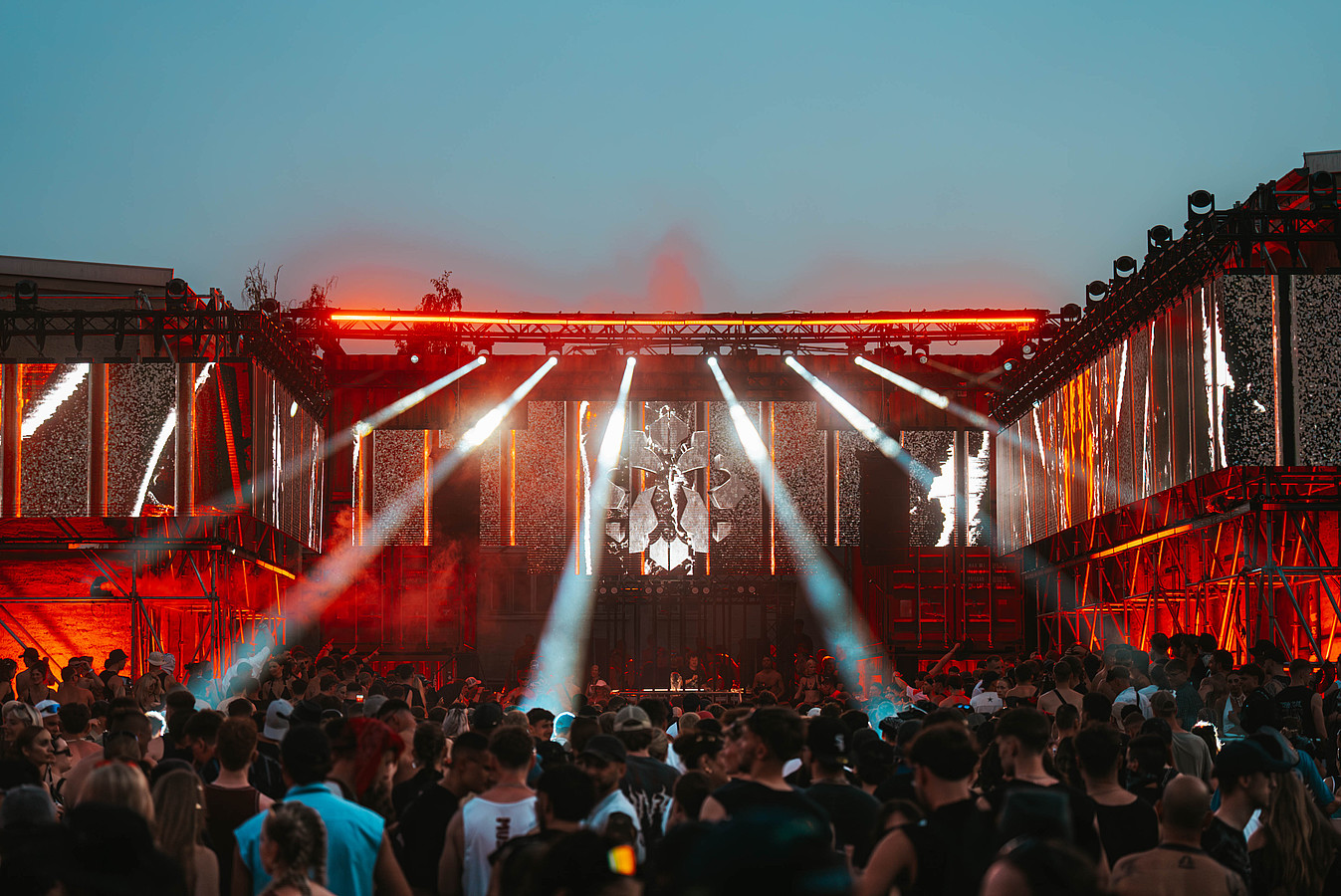
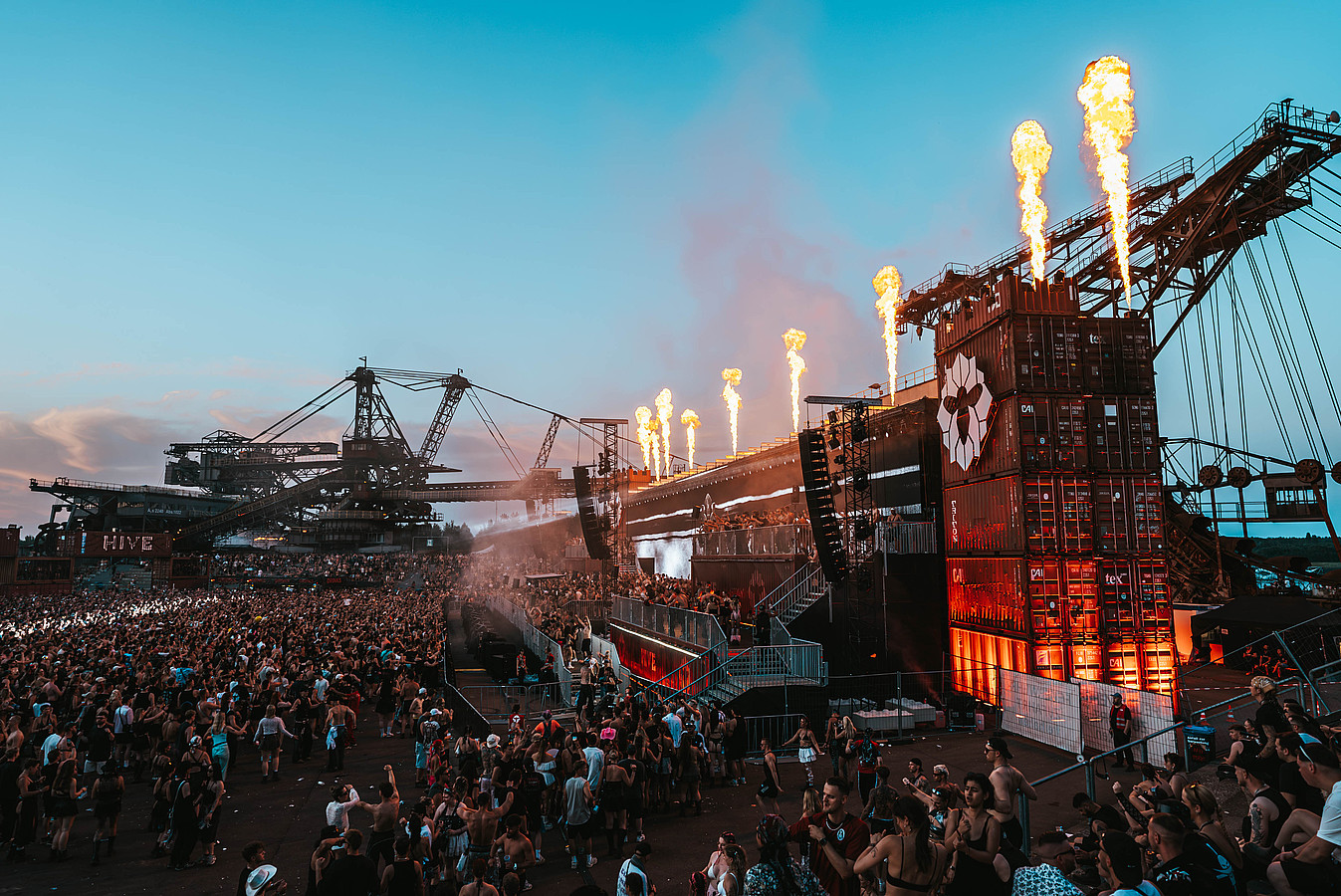
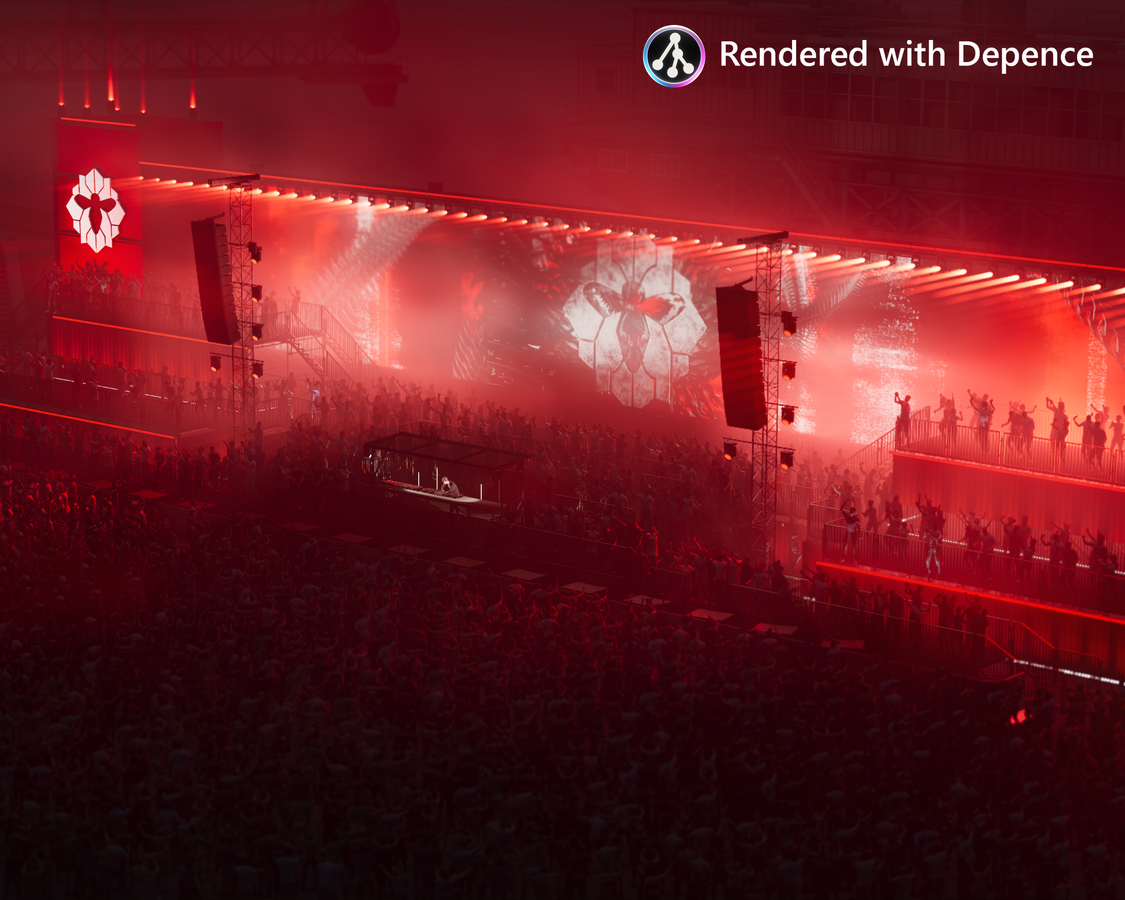
The Mainstage design was developed jointly by Janik Hensen and lighting designer Florian Grimm from Clubkind. Their core idea was to blur the line between stage and crowd. A visitor platform up to six meters high stood in front of the center wall, building the audience into the stage over several levels. “They weren’t just standing in front of the stage anymore; they were part of it,” says Janik Hensen, CEO and owner of Dekor Event.
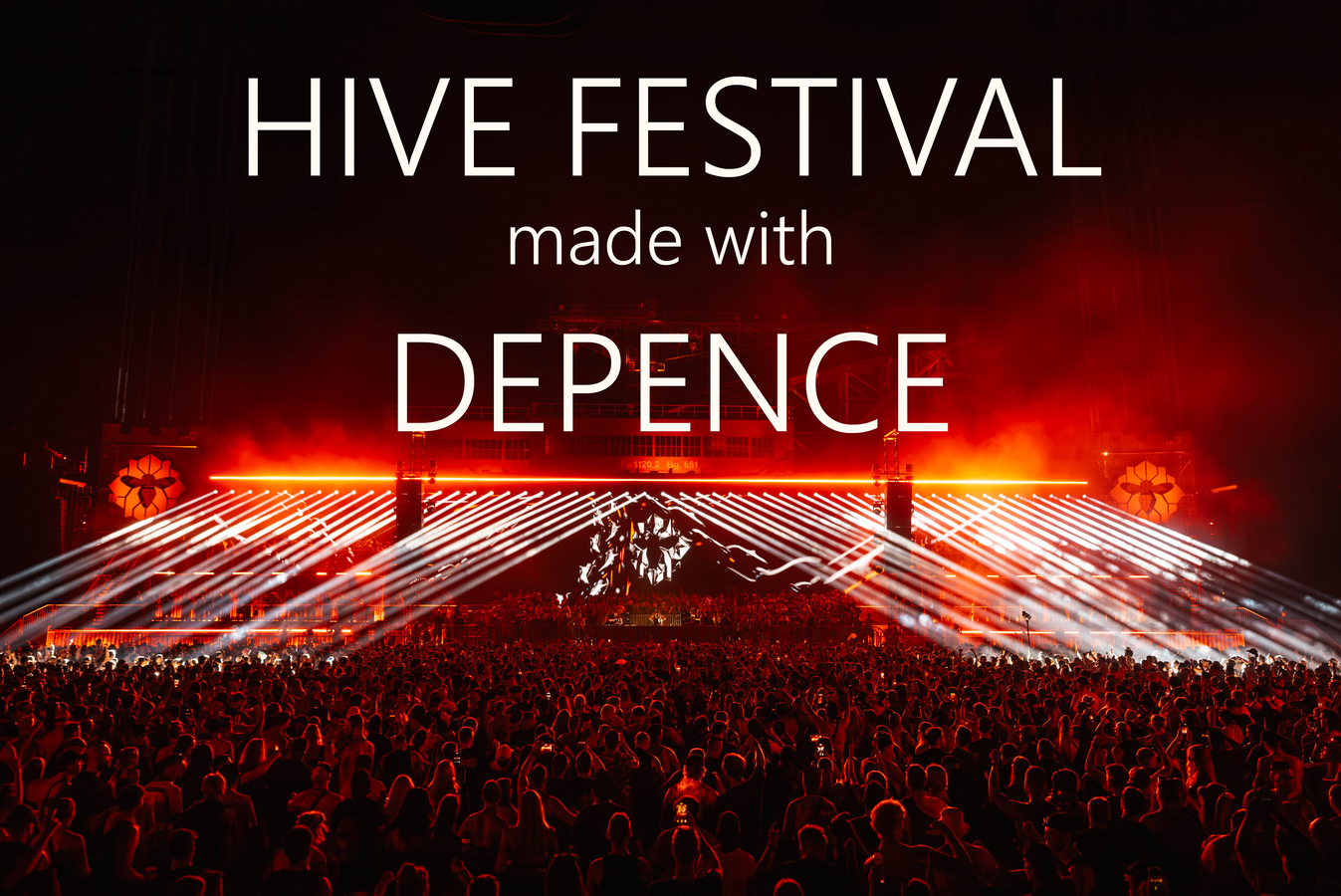
Lighting tied the levels together. Highly segmented, individually controlled ACME Pixel Lines drew the image of a comet crashing onto the stage and slowly fading out. A large central LED wall carried the video, closely linked to the lighting and to 3D environments.
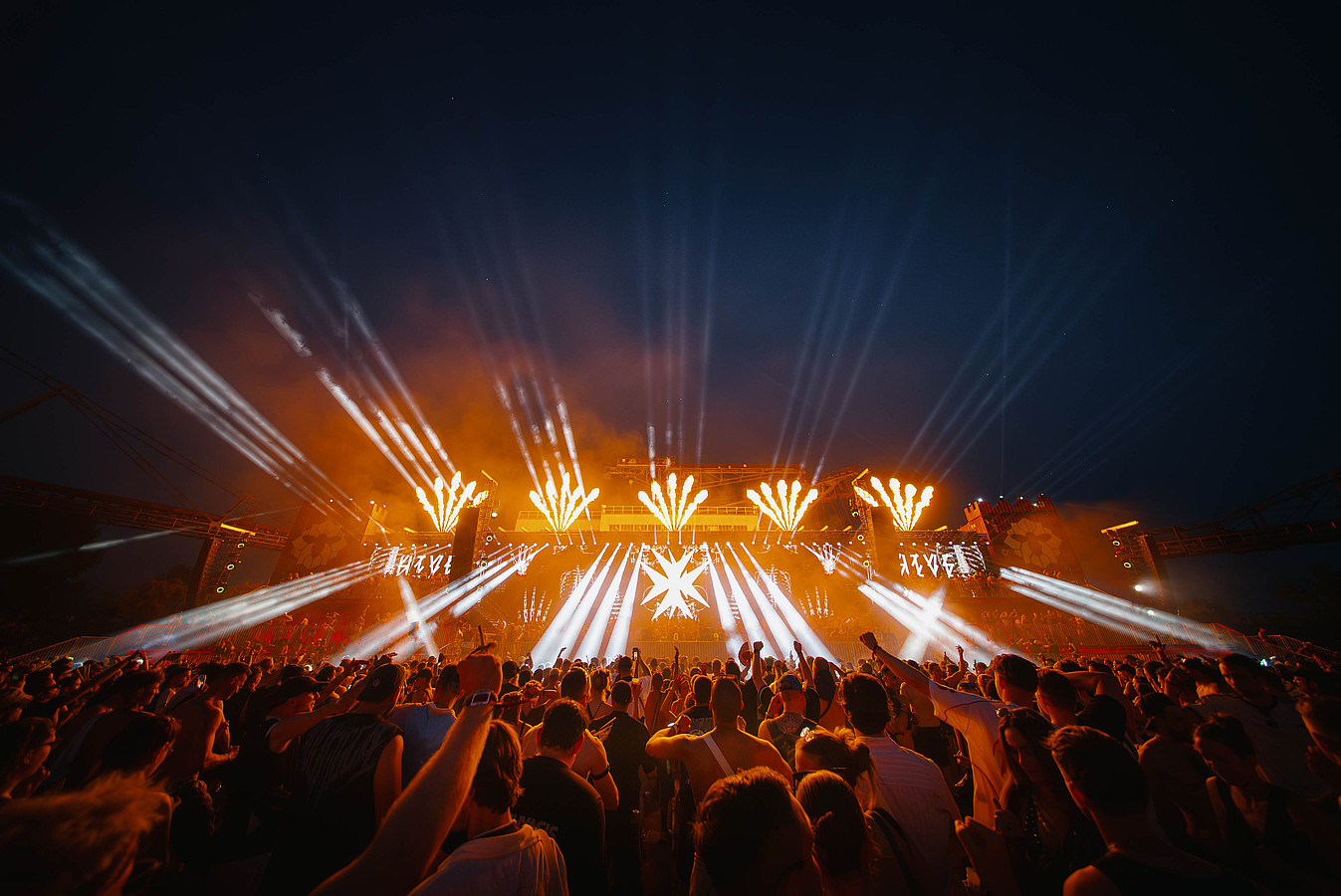
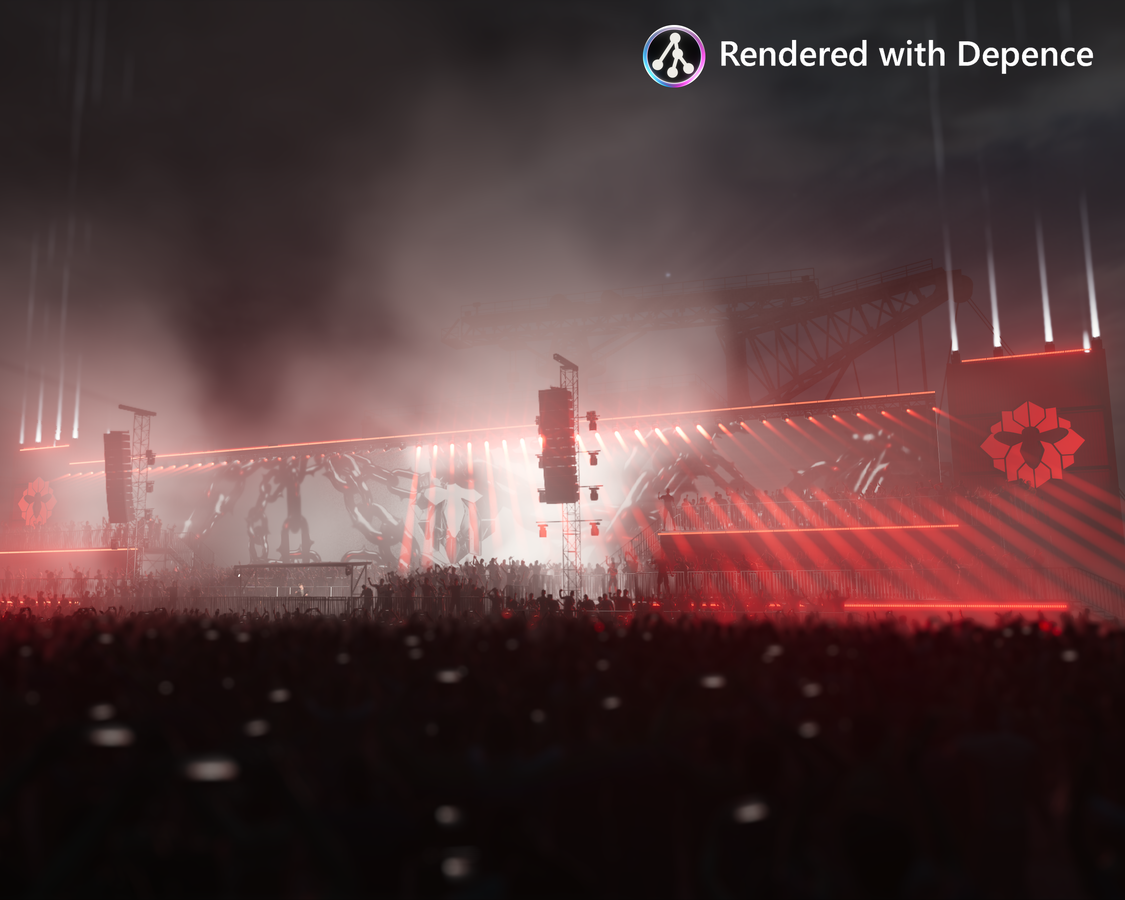
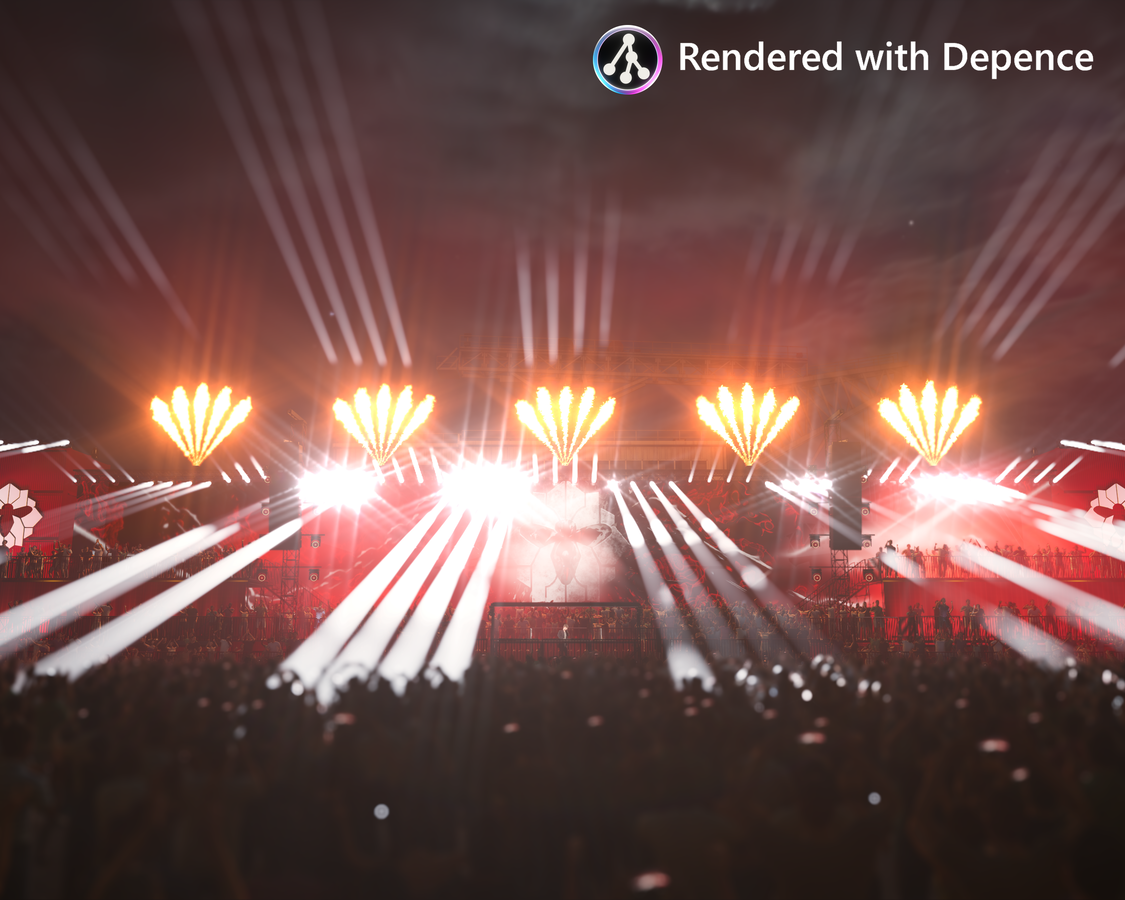
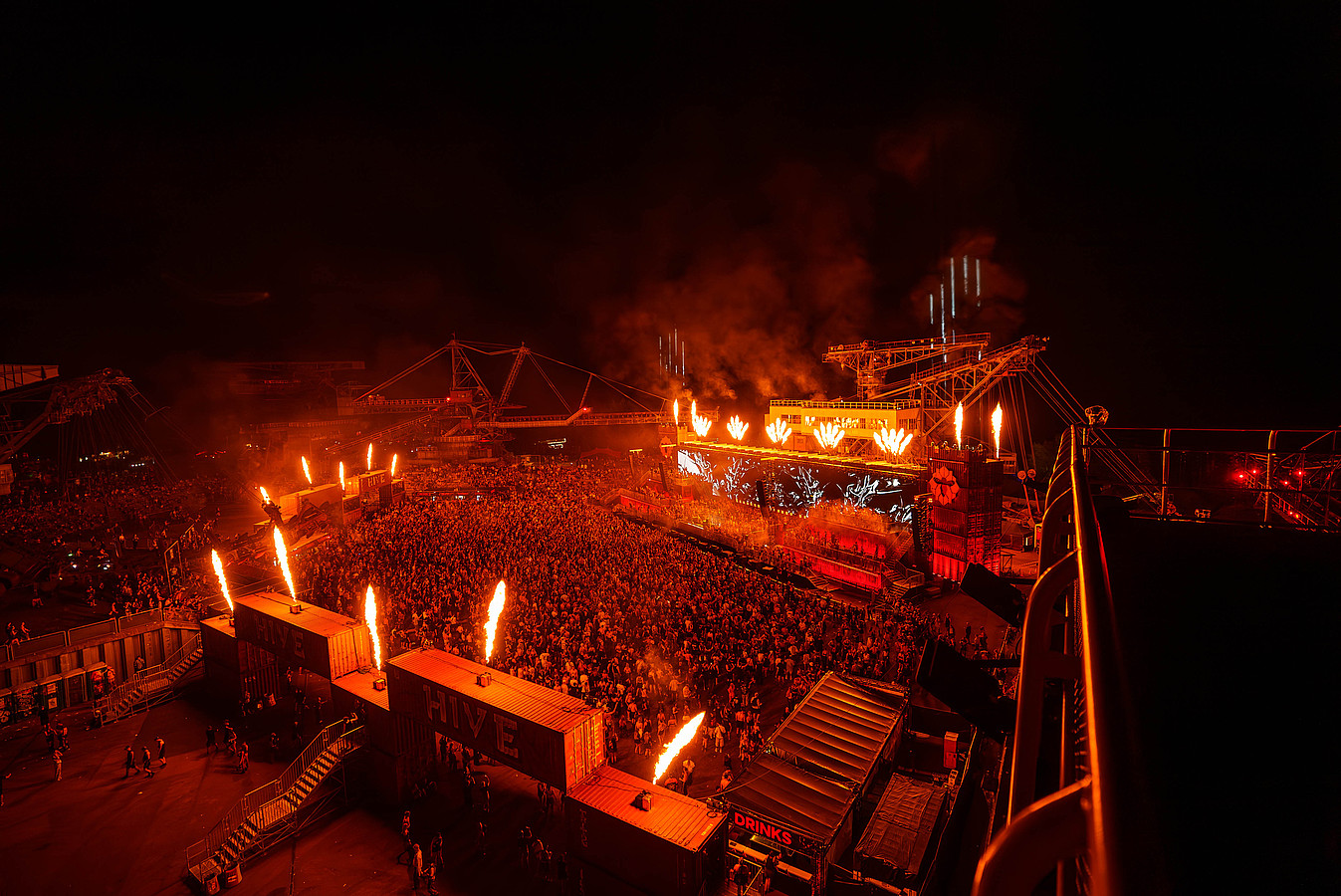
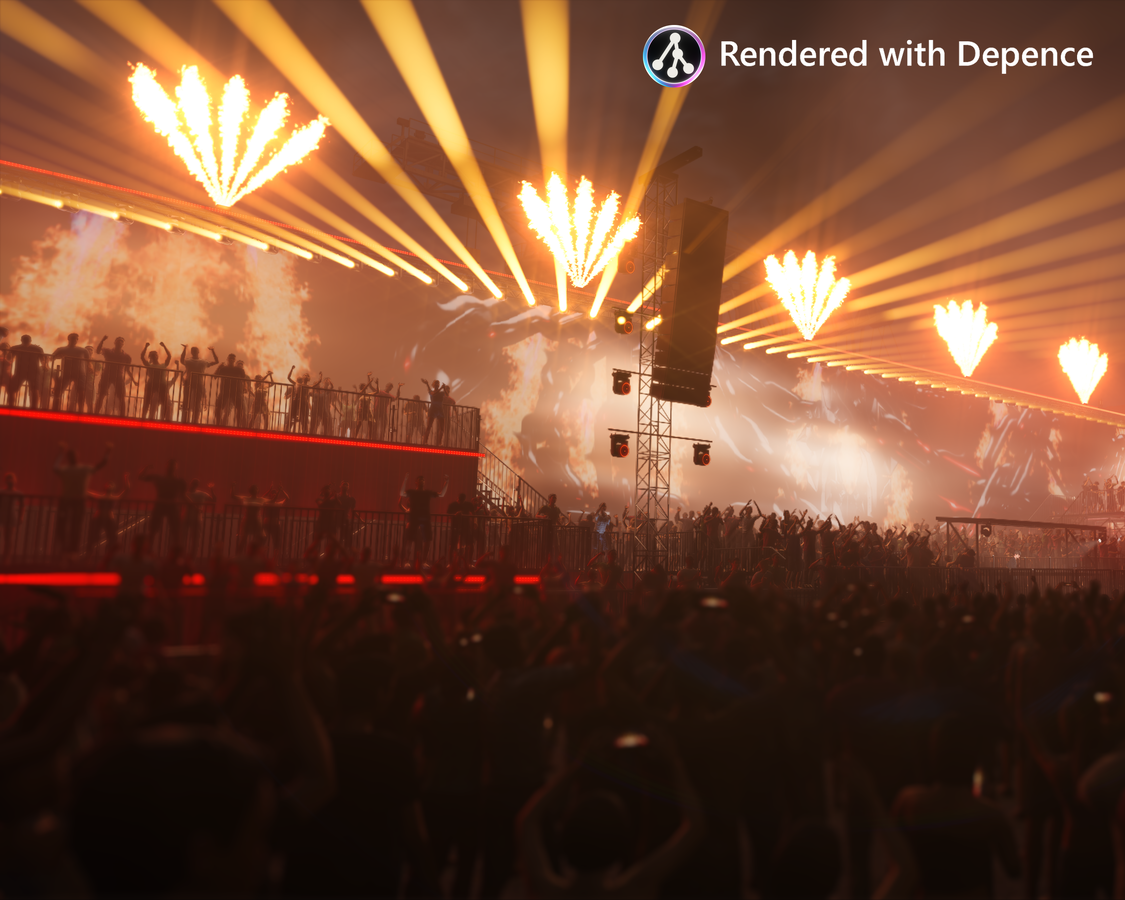
The SFX were part of the same design. Around 55 flame projectors were synchronized with flame imagery on the LED wall. “It makes a huge difference whether you program it on-site or pre-visualize it, set two cues, and have it work perfectly right away,” says Hensen. Pre-visualizing in Depence saved time and consumables and still left room for last-minute changes during the live show.
The planning process
The client had a clear idea for the stage, including shipping containers and several levels, but no drawings yet. Hensen Grimm built first, simple models in Depence to test how the levels worked together and where the lighting should go. The concept was then refined in several rounds with the client.
Technical planner Thomas Koppers then moved the design into Vectorworks to check its technical feasibility. After that, the project returned to Depence for show preparation. In most projects, Koppers works the other way around: he creates all drawings and plans in Vectorworks, sets up the DMX patch and transfers the data to Depence via MVR before programming the first lighting states. The seamless integration between the two programs makes this workflow possible.
“Without Depence, this vision wouldn’t have even been able to develop,” says Koppers.
On site
The setup was completed ahead of schedule. Since most of the programming had been done beforehand, the team mainly focused positions at the stage. The remaining work took place in the Depence studio. During the shows, the Mainstage was operated by Jan Bungener and Florian Grimm.
This had several practical advantages. With outside temperatures around 40°C (104°F), the team could work in an air-conditioned room in the evening. “That’s where the really good ideas were born,” says Hensen. Stage crews were not disturbed by moving lights during setup, and the site, powered by a mix of generator and grid power, used less energy.
The LED rear wall was technically the most demanding element. It was about 74 meters wide and assembled from individual panels, then hoisted as a single piece. Working outdoors, the team had to account for wind throughout. Above the wall hung ACME Pixel Lines in high-resolution mode, which alone used a complete processing unit.
Working with Depence
Beyond planning, Dekor Event uses Depence in sales. Instead of fixture lists, clients receive a digital presentation with a budget overview by trade, a 3D view and renderings of the stages. “This is our new standard for quoting,” says Hensen. It has helped the company win more projects.
For lighting designers, a prepared Depence file is “the absolute foundation for preparing their entire show,” says Koppers. It lets them check every look against the real stage before they arrive on site. Colors are a good example: a red that looks right on the console screen can be checked in Depence against the actual stage background and adjusted early, long before the first show. At Hive, external trades were already familiar with the software, which made coordination easier. “Depence is simply the benchmark here,” says Hensen.
Koppers also points to Syncronorm’s support: “I’ve never had to wait more than a day for an answer. If I urgently needed a specific fixture, I had it a few hours later. Especially at a festival, that kind of fast and reliable service is worth its weight in gold.”
Facts
Credits