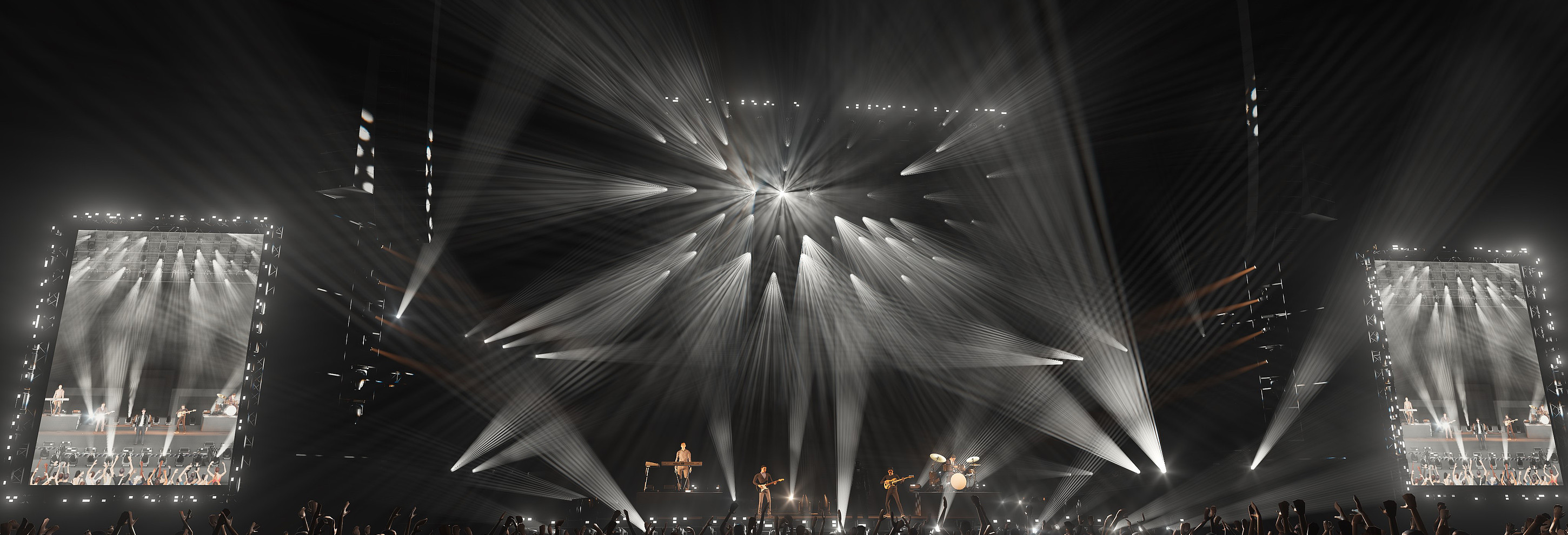
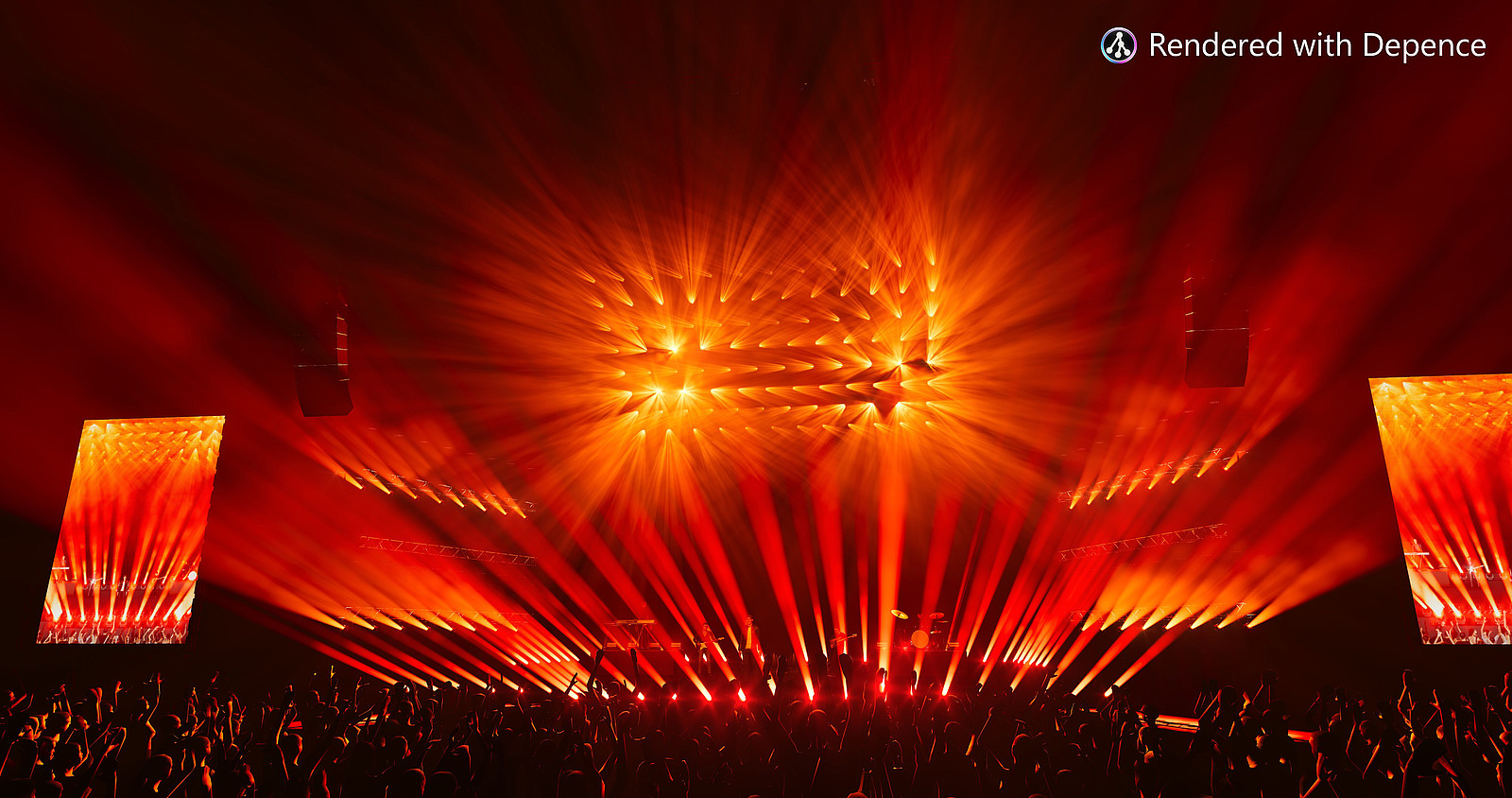
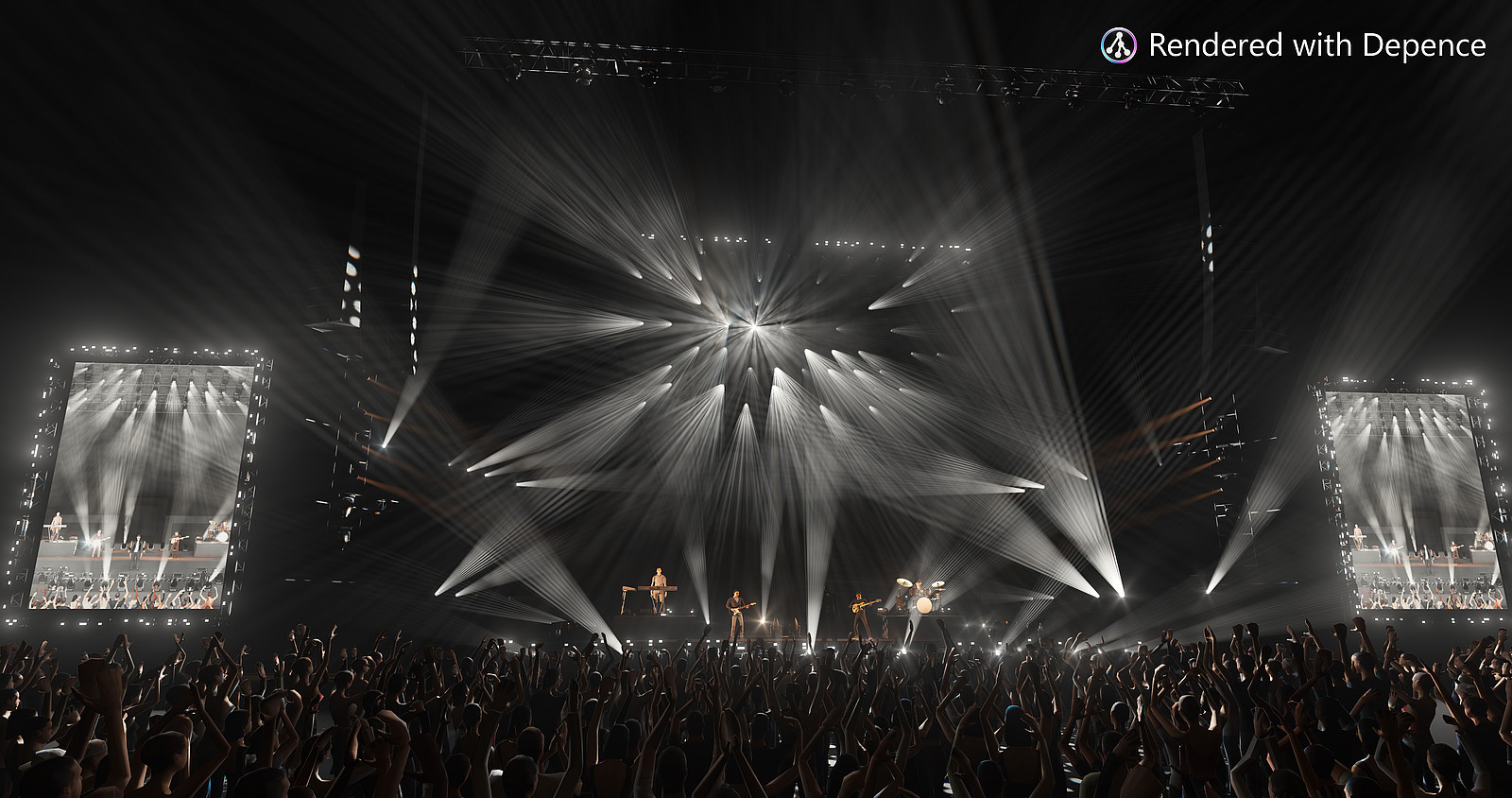
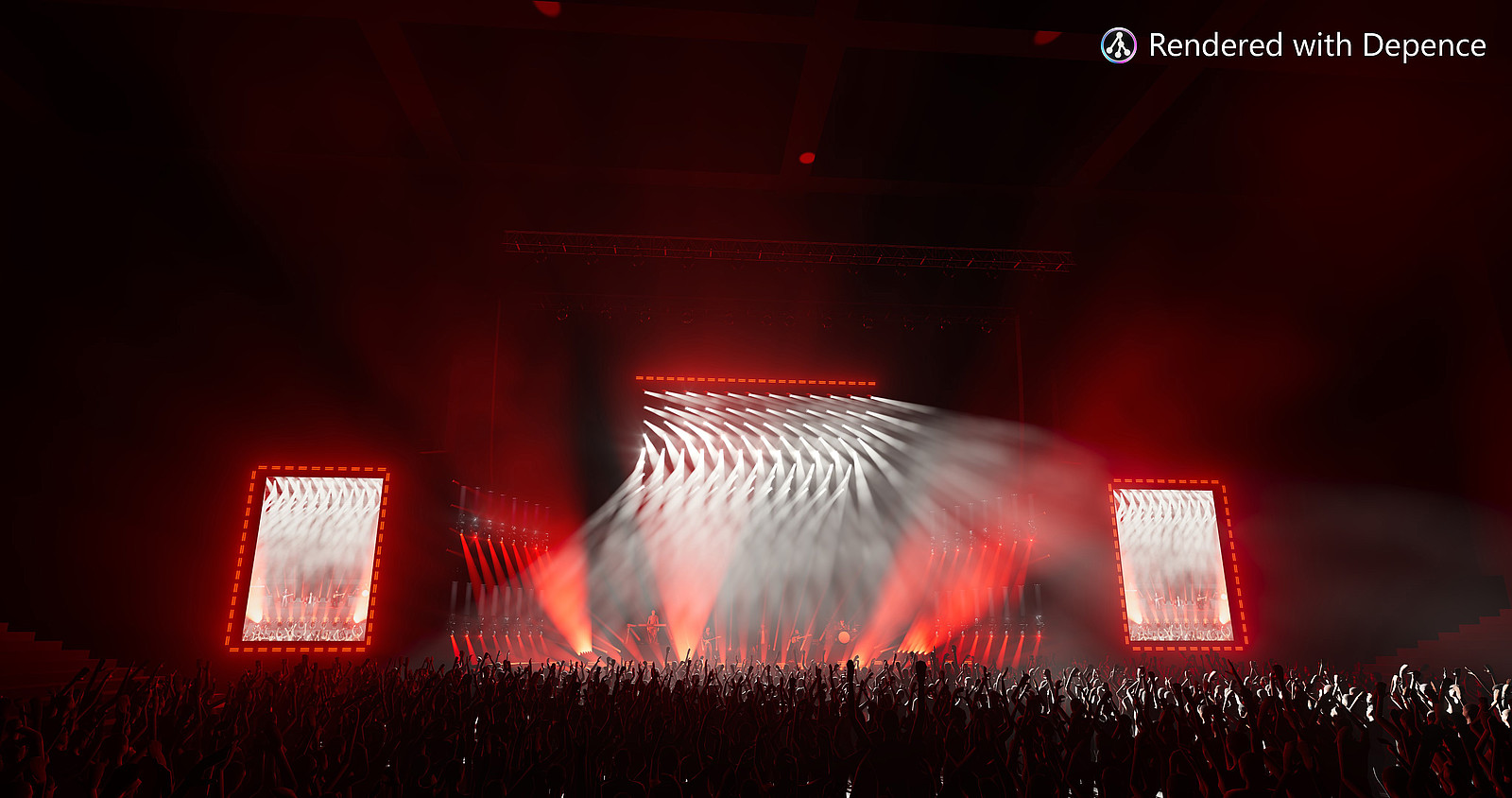
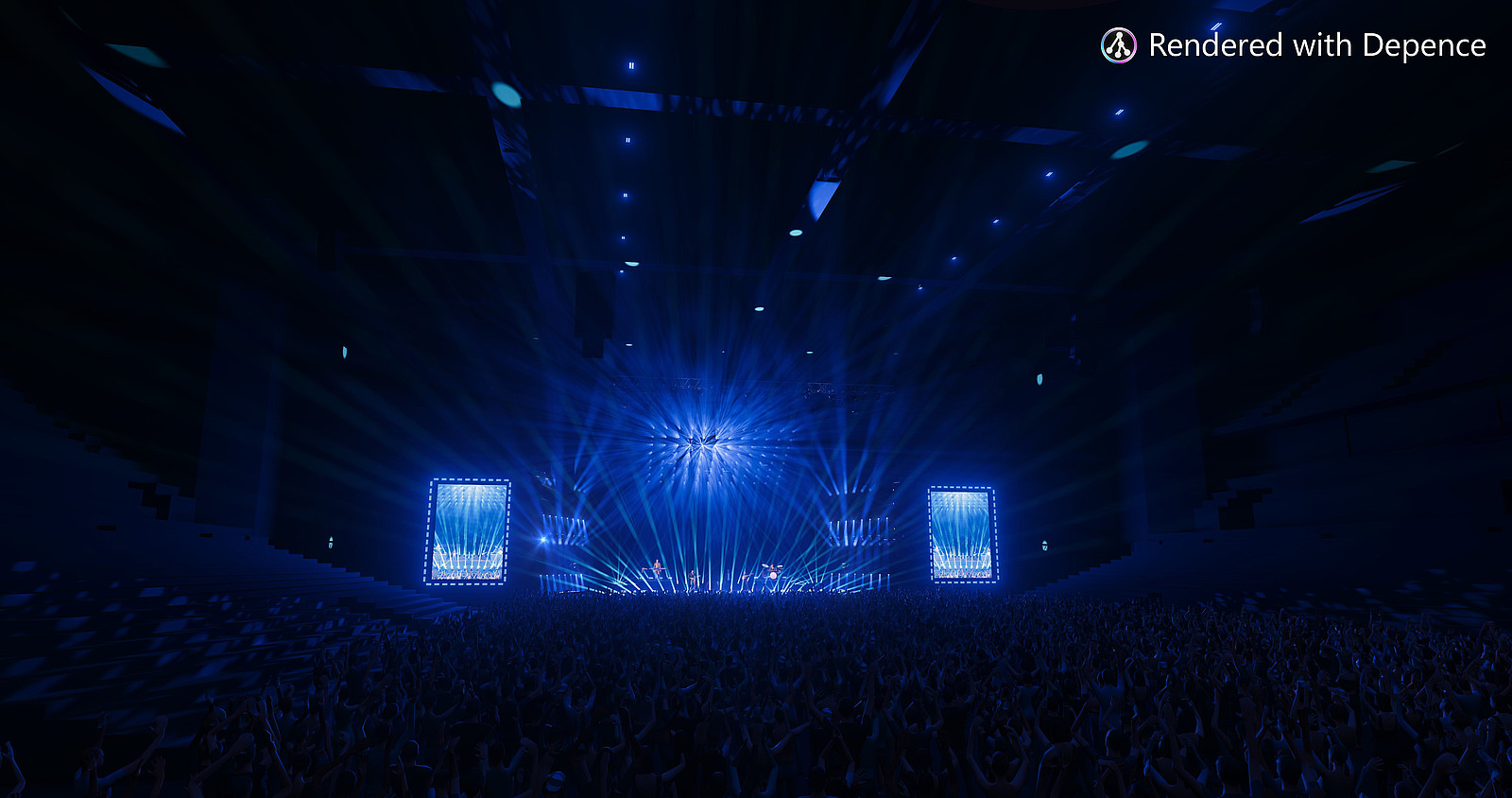
Founded by lighting designers, NXT Lights was created to build professional tools around the realities of modern production. That philosophy was put to the test at the Ákos Arena 2025 show in Budapest, where 96 FLEXON L fixtures became a central part of an ambitious arena-scale lighting design by Madarász János. Programming was handled by 17-year-old Borisz Szakaly, who used Depence to pre-visualize and program the production, including the lighting, kinetic trusses, LED content and complex spatial interactions. Using Depence, Borisz was able to build and refine the show virtually before entering the venue, bringing an extraordinarily complex production close to show-ready before load-in.
Borisz Szakaly - Lighting Programmer
Can you introduce the lighting concept behind the show from a programmer's perspective, and explain how the 96 NXT Lights FLEXON L fixtures became part of the programming workflow?
When I first heard that a huge batch of 100 brand-new, high-powered LED profile fixtures became available, I immediately knew we had to build something monumental. As I started exploring the creative possibilities of the fixtures, it became clear that they had the potential to play a major role in an arena-scale design.
That ultimately led us to use 96 of them as the core visual element for the Ákos Arena 2025 show. Arranging them in a massive 12x8 grid on kinetic trusses allowed us to create some incredibly dynamic, unique looks and a level of visual variety that we simply couldn’t have pulled off without a high-quality, realistic pre-vis tool like Depence.
How did you use Depence to build and develop the show before entering the arena?
Pre-visualization is the absolute core of my workflow. It enables me to program highly detailed, timecode-heavy lighting designs more efficiently than ever. For this project, Depence wasn’t just about lighting - I used it to seamlessly integrate the live video content. Even the complex movements of our 8 kinetic trusses were programmed entirely in the software.
Another really cool feature is the ability to add virtual cameras and loop their feed back to any virtual LED wall. This meant I could see exactly what would appear on the side IMAG screens in real-time while programming, bridging the gap between lighting and video.
How close was the Depence visualization to the final result in the arena?
While this was my second arena-scale show, I’ve relied on Depence for many previous projects, so I knew how incredibly realistic its rendering engine is. Still, once I arrived at the arena, set up the basics - pan/tilt and pixel - order inverts - and started calling my presets, I was blown away.
After a quick position calibration and color match, the show was already 95% show-ready. I only had to tweak minor details like shutter values, gobo rotation speeds, and a few focuses. The speed and complete peace of mind this workflow gives me on-site is game-changing.
With 96 FLEXON L fixtures, moving trusses, LED content, and the rest of the production all interacting, what were the biggest design or programming challenges?
Our design included 5 semi-transparent kinetic LED panels moving right between the massive Flexon L grid and the main upstage LED wall. On traditional 2D paperwork, everything looked like it fit perfectly.
However, once we navigated the full, shaded 3D render in Depence, we spotted physical collision and spacing issues. Finding these spatial conflicts in the virtual environment saved us from absolute panic and hours of on-site problem solving. We were incredibly lucky to find and solve these problems weeks before load-in, rather than just a few days before the show.
You are already working on arena-scale productions at the remarkably young age of 17. How important have visualization tools such as Depence been in helping you experiment, learn, and develop ideas that would normally require access to a full production setup?
I started learning lighting design and programming at home, all by myself when I was just 12 years old. Because I didn’t have a physical rig to learn and experiment on, pre-vis tools became my playground early on. I loved recreating real venues and programming full virtual shows. When I was 14, I sent one of my pre-vis renders to a theater I dreamed of working at. Days later, I got my first real gig at the RaM-ArT Theatre in Budapest.
Because of software like Depence, I already had a lot of design and console problem-solving experience before I ever touched a large-scale physical rig. Features like the Hang Tool and instant environment creation made the design process genuinely fun. I never stop experimenting. I’m fully convinced that pre-vis is not just the future of our industry - it’s also the present. Depence is already incredibly close to perfect for my workflow, and I can't wait to see what the future holds for this technology.
NXT Lights - Manufacturer Perspective with Máté Lukacsovics,
CEO & Alexander Geszler, COO
NXT Lights describes itself as a lighting brand created by lighting designers and built for creators. Why is it important for you to see products such as FLEXON L being used by designers in real productions rather than only demonstrating them in controlled product presentations?
For us, the most valuable insight comes from seeing how a fixture is actually used in the hands of different designers. Every production brings a different creative approach, workflow, and set of technical demands, often revealing possibilities or needs that we may not encounter in our own work. We closely follow the productions where our products are being used and, whenever possible, seek direct feedback from designers, programmers, and rental companies. In a real production, creative intent, programming, output, movement, and reliability all come together at once, which makes this kind of feedback far more valuable to us than a controlled product demonstration.
We believe product development does not end when a fixture enters the market. User experience helps us refine existing fixtures, further develop the software, and shape future NXT Lights products. The fact that 96 FLEXON L fixtures became such an important part of this production is exactly the kind of application we want to see: when a fixture becomes more than just a piece of hardware and becomes part of the designer’s creative language.
Ultimately, our goal is to give designers tools that offer the greatest possible freedom, where technology supports the idea rather than limiting it, and where creativity is the only real boundary. That is what “Created by Lighting Designers. Built for Creators.” truly means to us.
For a manufacturer, how important is it that a fixture is represented accurately inside a visualization platform such as Depence?
It is becoming extremely important. Today, the first experience a lighting designer has with a fixture may happen digitally rather than physically. Before seeing the product in a showroom or using it on a production, they may already be placing it into a Depence project, programming it, and evaluating how it fits into their design. That means the digital representation of the fixture has to communicate its behavior as accurately as possible.
For a manufacturer like NXT Lights, this is particularly valuable because it reduces the distance between discovering a new product and actually creating with it. A designer can begin understanding the fixture, experiment with different looks, and evaluate how it works within a complete production environment before the physical rig even exists.
The Budapest project is a great example of this. The lighting, moving trusses, LED content, and other production elements could all be developed together inside Depence before entering the arena. For us, visualization is therefore much more than a presentation tool. It is becoming part of the connection between the manufacturer, the designer, and the final production.
What did a production of this scale - with 96 FLEXON L fixtures used in an arena environment - demonstrate to NXT Lights about the product and the way designers are using it creatively?
For us, the most important part was seeing FLEXON L used as a creative tool at this scale. The fixture was designed as a multifunctional profile with high output, a wide zoom range, precise optical control, framing, color mixing, and the flexibility required for very different production environments. But specifications only tell part of the story.
When 96 fixtures become part of one arena design, you start seeing how the product behaves as a complete system and how a designer can use repetition, movement, beam architecture, and large-scale looks to create something much bigger than the individual fixture. That reflects the original philosophy behind FLEXON L very well. We wanted to create one fixture that gives designers enough flexibility to solve many different creative tasks without adding unnecessary complexity to the rig. Seeing that translated into a complete arena show is much more meaningful to us than any specification sheet.
Looking forward, how do you see the relationship between lighting manufacturers, visualization platforms, and lighting designers evolving? Could accurate digital versions of fixtures become an increasingly important part of how new lighting technology is introduced, tested, specified, and ultimately brought to the stage?
Absolutely. We believe the digital version of a fixture will become an increasingly important part of the product experience itself. Lighting design is moving toward workflows where decisions are made much earlier. Designers, programmers, production teams, and clients increasingly want to see and evaluate a show before equipment arrives at the venue.
For manufacturers, that creates a responsibility to make new products available accurately inside the tools professionals are already using. In the future, discovering a fixture, testing it virtually, programming it, presenting the concept to a client, and then moving that same project into the real production environment should feel like one continuous workflow. Platforms such as Depence help make that possible.
From the NXT Lights perspective, this is especially exciting because it gives designers access to our fixtures before they necessarily have physical access to the product. They can start experimenting immediately and decide for themselves what the fixture can contribute to their design. Ultimately, we see visualization as part of a much closer relationship between manufacturer and creator: less about telling designers what a product can do, and more about giving them the tools to discover it for themselves.